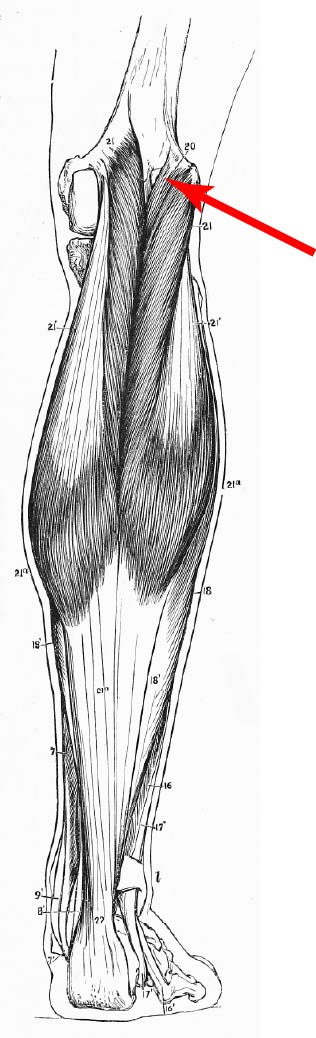
Plantaris is a small muscle located in the posterior compartment of the leg, running alongside the larger gastrocnemius and soleus muscles, and is involved in weak plantar flexion of the foot and knee flexion. Although considered vestigial in humans, it assists in proprioception, contributing to the body’s awareness of limb position. Due to its diminutive size and location, its functional role is minimal compared to other muscles in the calf.
The name "Plantaris" is derived from the Latin word "planta," meaning "sole" of the foot, reflecting its involvement in foot movement despite its minor role. Its small, thin tendon resembles that of the palmaris longus in the forearm, giving it a legacy recognition in anatomical nomenclature.
Without the Plantaris muscle, the human body would have only a negligible loss of strength in plantar flexion and knee flexion, but would largely retain full functional capacity for walking, running, and other leg movements. Additionally, its absence would minimally impact proprioceptive feedback from the leg, as other muscles and structures compensate for its role.