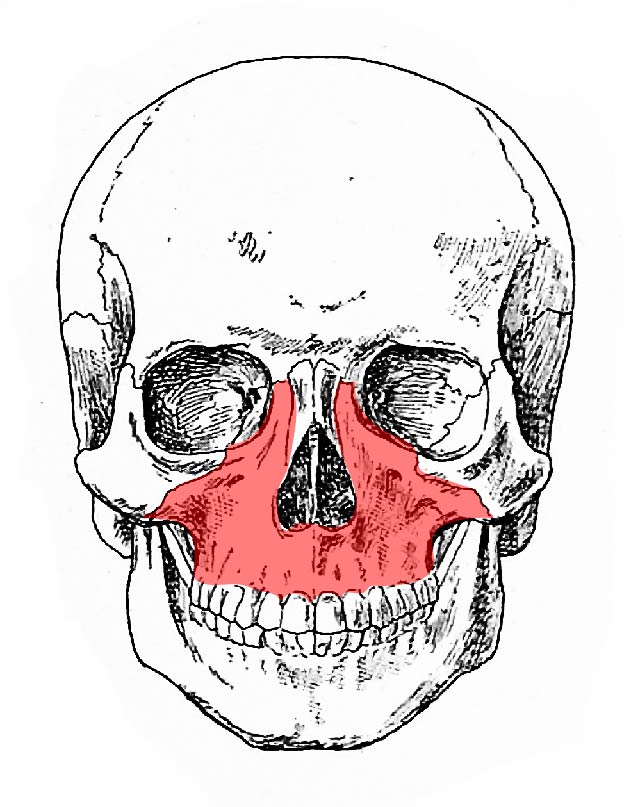
The maxilla forms the upper jaw and is a paired bone that contributes significantly to facial structure, including the hard palate, nasal cavity floor, and orbital floor. It anchors the upper teeth and provides attachment points for several facial muscles involved in expression and chewing. The maxilla also contains the maxillary sinus, which helps reduce skull weight and adds resonance to the voice.
The word "maxilla" comes directly from Latin, where it means "upper jaw" or "jawbone." The term has remained essentially unchanged since ancient Roman times, reflecting its straightforward anatomical description.
Image