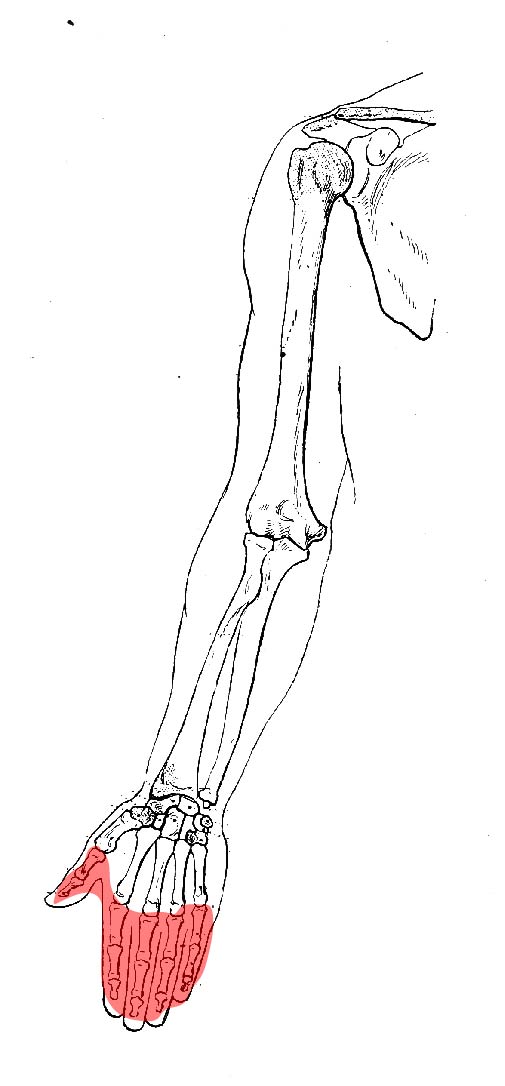
The phalanges of the hand are the 14 small bones that make up the fingers, allowing for precise movements, grasping, and dexterity. Each finger has three phalanges—proximal, middle, and distal—except for the thumb, which has only two. These bones provide structure and flexibility, enabling fine motor skills essential for daily activities.
The term "phalanges" comes from the Greek phalanx, meaning "battle line" or "formation of soldiers," referring to their orderly arrangement in rows.
Image